
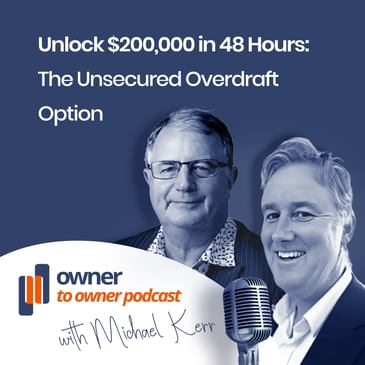
Host @Michael Kerr and @Martin Cattach , founder of Finance for Business, discuss the stranglehold the big four banks on small business lending, and explore alternative options for financing.
Martin outlines alternative #financing options, especially the diverse and fast growing range of #fintechlenders for #smallbusinesses
We cover;
- The role of #workingcapital in business growth
- The entanglement trap that owners often find themselves in
- The importance of understanding your financial position
- How to get more value from your accounting software package and bank account data
- Planning ahead to avoid cash flow problems
- The role of fintech lenders in providing quick and flexible funding solutions
Martin shares examples of clients he has worked with and the positive impact alternative financing has had on their businesses.\
Thanks for listening. Visit the Owner To Owner Podcast website to subscribe, listen back, or check out any resources or information mentioned on the show.
Search @ownertoownerpodcast on your favourite podcast player to subscribe and listen to the episodes.
Reach out to Michael Kerr via the website if you need personal assistance or advice for your small business.
michael.kerr@kerrcapital.com.au
www.ownertoownerpodcast.com.au
Connect with us:
Website: ownertoownerpodcast.com.au
LinkedIn: Connect with Michael Kerr
Share Your Story: Want to be a guest? Apply here.
Disclaimer: The information shared on this podcast is for educational and general information purposes only and does not constitute financial, legal, or professional advice.
[00:00:00] Hi, it's Michael Kerr here presenting Small Business Banter.
[00:00:12] Welcome to the Small Business Banter podcast. I'm Michael Kerr your host and I'm also the founder
[00:00:17] of Kerr Capital where I work day to day with business owners. The Small Business Banter podcast
[00:00:23] is built just for business owners and will be especially relevant if you're an owner looking
[00:00:28] to sell, if you've been unexpectedly approached by a potential buyer or if you're an aspiring
[00:00:34] owner about to buy a new business. There's a lot on the line personally and financially.
[00:00:40] It's stressful, it's emotional and it's usually new territory. So to help each episode of Small
[00:00:47] Business Banter is a discussion between me and another business owner or an experienced
[00:00:53] Small Business Advisor. We talk about their experiences. So what you'll get is practical
[00:01:01] real life advice, different takes on everyday problems and a renewed confidence to tackle your
[00:01:08] own business challenges. Good morning and welcome into edition 139 of the Small Business Banter podcast.
[00:01:27] Martin Kattick joins me today. Thanks for coming in Martin.
[00:01:32] Oh thank you for inviting me Michael, it's a pleasure.
[00:01:34] Martin for those listening, Martin to your call when the banks say no. I think your tag line is
[00:01:40] call me when the banks say no which prompted me to reach out and chat to you. You're the founder
[00:01:45] of Finance for Business, a working capital strategist for small and medium businesses.
[00:01:52] You've had a pride that a fairly diverse career. Again big thanks for joining today,
[00:02:00] a really relevant discussion for small business owners for reasons that we're going to talk about
[00:02:07] the stranglehold of the big four have had on business lending to small business over the years.
[00:02:14] So we also touch on some of the options available to small business owners today outside of the
[00:02:19] big four. We're going to talk a little bit about how to prepare better for getting any finance
[00:02:25] really. It's often the lifeline of a small business and maybe some of your experiences
[00:02:32] and examples of some of the clients who work with to help them grow their business.
[00:02:38] So Martin do you want to just give us a couple of minutes on your background where you came from
[00:02:43] and what the core business is today? Right, yeah more than happy to. I was sitting down
[00:02:50] preparing for this and I thought I've actually spent 20 years in finance
[00:02:56] and 10 years of that was at the beginning of my career. So from about 22 to 32
[00:03:05] and the last 10 years I have spent in finance and in between I did a couple of interesting things.
[00:03:11] I worked in a number of different industries, communications, IT and social and policy research
[00:03:21] for government. So it's quite diverse but I suppose I'm always been orientated towards the
[00:03:28] sales and marketing end of the business and the diversity of things that I've done in my past
[00:03:33] gives me a great understanding of the issues that small business face and of course I run
[00:03:40] a small business right now myself which is finance for business. So it puts you in touch
[00:03:46] with a lot of things I suppose something that goes back a little bit earlier than that that is
[00:03:50] interesting is that I grew up in hotels which turn family run hotels. Yeah family run hotels which
[00:03:59] is basically gives you a great cross section of society to deal with and I started working
[00:04:08] in a public bar when I was 14 years of age. So you know in colourful old Fitzroy wasn't it?
[00:04:16] Yes it was in colourful old Fitzroy so actually if anyone knows a little bit of the Australian
[00:04:21] gangster history the hotel we were in was actually where the famous Squizzy Taylor who was a
[00:04:27] gangster in Fitzroy some time ago and they actually launched his book in that hotel
[00:04:33] some time ago as well so it was a bit of an attourish. So unfortunately it is now closed and
[00:04:38] has been taken over by St Vincent's and there's now a renal unit but Fitzroy at the time I think
[00:04:45] had more hotels than any other suburb in Melbourne and it's one of the smallest so
[00:04:50] there's a hotel on every corner in Fitzroy. Yeah there are some great old hotels in there
[00:04:54] you know it's heartland stuff isn't it and some of the hotels have actually preserved pretty
[00:05:00] well what they might have been you know 50 years ago it looks and feel so yeah as you say that's a
[00:05:09] great foray into a business in a career advising small business owners you've worked across those
[00:05:16] different sectors. He grew up in a family business and the small business community
[00:05:23] in Australia is you know he's very very diverse and so you know you're going to be talking to all
[00:05:31] sorts of different business owners about different sorts of challenges so you can kind of perhaps
[00:05:36] see it from a few different perspectives or from their perspective even if it's a you know a
[00:05:41] fairly unique business. Can I just set the scene a little bit with how you see the the current
[00:05:49] we are we have been I think we still pretty much are dominated by big four banks when it comes to
[00:05:55] small business lending what's the state of play as you see it. Well there's been a lot of change in
[00:06:01] the last 10 years and what's available to small business in lending the banks are still the
[00:06:06] dominant player and in the majority of cases they're the cheapest and the reason they are the
[00:06:13] cheapest is that the banks do most of their loans or 99.9% of them secured and buy a residential
[00:06:22] property mostly yeah and a lot of people don't realize that the banks use a document called an
[00:06:29] all-money mortgage so for example if you have a mortgage with let's use NAB as an example
[00:06:36] and your business banks with NAB and you have an overdraft with NAB that you might have done
[00:06:44] rather quickly might only be a small overdraft but it is in fact secured against your residential
[00:06:49] property and people don't actually realize that those two things are linked so what the banks
[00:06:55] have traditionally done is they have locked a client up so once you're with the bank
[00:07:01] all right they've got your house they're possibly funding your investment property as well
[00:07:07] and the situation is that you've got a single supplier source which is a risk in any business
[00:07:13] because if the bank changes its mind and if I look at the current environment now and I do a lot of
[00:07:18] work in the construction industry but particularly in the residential construction industry is
[00:07:25] considered by most of the banks don't touch you know we've seen a lot of big failures in
[00:07:30] that area and there's a lot of small builders that have fallen over as well what do you do if
[00:07:35] you're a builder and you survived the current problems your bank is going to be of no help to
[00:07:43] you because you've got a single source of supply you don't have a diversified range of borrowing
[00:07:49] in your business you're sort of put all your eggs in one basket to use the investment type
[00:07:56] statement you know no one would invest in just one yeah yeah yeah yeah so yeah I I did understand
[00:08:04] there was almost to classify that lending as either residential or business there was I think a lot
[00:08:12] some of it was or a lot of it was buried in as residential lending at some points but so one
[00:08:18] way or the other it's you know it's it's cheaper it's probably easier because you don't
[00:08:26] need to necessarily dig too deep on the business if you've got plenty of coverage on the
[00:08:31] residential property security on place that was the case once but they tend to look very deeply at
[00:08:38] the moment they're incredibly risk risk averse across all small businesses because we're in a
[00:08:44] an economy that's tightening at the moment and you know I've mentioned builders and construction
[00:08:51] related which is a big part of the Australian economy but also I've seen that they are not
[00:08:56] very helpful to those in the retail industry either yeah at the moment which are under pressure you
[00:09:01] know that so I often use the expression that banks are fair weather friends fair weather friends
[00:09:08] yes yeah yeah and so they are but they are so they are undertaking their analysis of a credit
[00:09:17] in a in a way we might expect anyway which is to look at the business first is that what
[00:09:22] what you're saying even and setting aside for a moment that the there is security they're
[00:09:28] they're going back to like a primary analysis of the business yes they're looking at the business
[00:09:35] and they have a big advantage because a lot of funding and that is is not so much based on
[00:09:44] financials these days you know here's my profit loss and balance sheet if we're a banker all the
[00:09:49] new fintechs everybody wants read only access to your trading account yeah because no source yes no
[00:09:58] matter what the financials say if we look in real time at transactions through the bank then we have
[00:10:05] a good idea and we can run analytics software across those transactions and make some decisions
[00:10:11] about how creditworthy they are what's their trading position and their liquidity
[00:10:16] yeah okay yeah so it's unfettered unadjusted real data isn't what goes through your bank account day
[00:10:26] in day out and there's a lot but you know but you've got to see from the banks where they see
[00:10:32] industries and get early warnings they have enormous data warehouses when you consider that
[00:10:39] the size let's take someone like nav or Commonwealth Bank they would have you know 500,000 small
[00:10:45] business customers possibly a million and they have that real-time data and they see trends and
[00:10:51] trading situations all the time so with armed with that data that's where they tend to be
[00:10:57] a bit awkward at times I think what you're saying is that with that that large bank of data if
[00:11:04] each of the banks have such a significant number of small business customers they're able to
[00:11:12] really dig deeper and look at industry by industry then they can take a view that construction or
[00:11:19] retail isn't a particularly attractive industry for them so there's forces at work there either
[00:11:27] if you're a part of that industry you know it's going to find it really really tough in terms of
[00:11:34] the from the from the from an owner's perspective given this what you've just talked about
[00:11:44] you know still strong control dominance by the big four what should an owner be thinking about
[00:11:50] doing to untangle themselves if they're completely tangled up and and and what are their options
[00:11:57] outside of the big four banks and and what do they do to better prepare themselves well there
[00:12:04] there are now quite a number of options outside the big four banks and let's talk about
[00:12:11] the detangling I apply methodology I call better business banking which is basically
[00:12:19] to diversify and not go a single source which is what happens when you're tying the bank so
[00:12:26] for example let's take generally the owner's residential property has some sort of mortgage on
[00:12:33] it you can replace that mortgage with a non-bank mortgage or from a different bank than where you
[00:12:40] actually do your business banking so we can keep our personal and business assets separated
[00:12:46] and that's one thing you can do and there are also the banks to have in order to manage their risk
[00:12:54] and diversify their own portfolios they are often the funders and the partial owners of most of the
[00:13:02] new fintech companies so but what the fintech does is it takes it away from the bank's
[00:13:09] policies and puts it into a higher risk category which generally means that it also has a higher
[00:13:14] rate but it's easy to get so you know that in finance there's always this rate for risk type
[00:13:22] calculation and then as a business owner you've got to look at what your ROI is going to be you
[00:13:27] know I often there are some terribly good unsecured overdraft products in the market at the moment
[00:13:34] that you can apply for and have granted in 24 48 hours except the only problem with these
[00:13:41] products you know it's no problem getting 100,000 or even 200,000 is that the rates are between 19 and
[00:13:47] 22 percent but I suggest to businesses that they look at applying for one of these overdrafts
[00:13:54] and keep that as a cash reserve you only pay when you draw down the funds and as an overdraft
[00:14:01] you can reduce the cost of those funds by paying it back but when opportunities arise
[00:14:07] and let's the simplicity let's use 18 percent as the number what's a percent and a half a month
[00:14:13] so if I can buy perhaps my competitor is is falling over next to me and I could buy all this stock
[00:14:21] and a fire sale value we'll then have paying a percent and a half a month so to grab that stock
[00:14:26] at you know 50 percent or 25 percent of its value yeah simple business decision yeah yeah um
[00:14:34] um yeah and look this is you know it's it's the nature of a lot of small businesses to be
[00:14:40] for one of a better term hustling and and if you can see an opportunity grab it I think one of the
[00:14:45] things you're kind of saying there is that um yeah they are expensive but if you look at the
[00:14:52] you know the return it may well be worth uh maybe I'll be worth it I think it's also
[00:14:59] potentially uh the right thing to this is idea of having credit you had you had said
[00:15:05] having a credit facility there applying when you're in a perhaps a strong position even if you don't need
[00:15:13] a facility there and then is that a is that a part of being ready for you know for opportunities
[00:15:20] yeah I think being ready for opportunities in a dynamically changing market and some
[00:15:25] of the downturn that we are now um I stress to my clients well get one of these um unscured
[00:15:32] overdrafts by holding costs per year if you don't use it as like 495 dollars yeah so you know to have
[00:15:39] a hundred thousand available in your backpuppet because one of the advantages of small business
[00:15:44] has is they can be very nimble yeah and if you're going to be nimble uh you've been
[00:15:49] needed for liquidity or to have some cash available to exercise that because that way
[00:15:53] you can take opportunities and that's what small business is very good at is taking opportunities
[00:15:59] and turning into profit with us. Hi there it's just a quick interruption to the podcast and
[00:16:07] it's a message from Kerr Capital a supporter of the podcast if you're a business owner thinking
[00:16:13] about selling and you're unsure about what you should do well the worst thing you can do
[00:16:18] is jump straight into an unprepared business sale cross your fingers and hope for the best
[00:16:23] if you want to take control get a sense of what your business is really worth
[00:16:28] and a plan to make it more sellable then head over onto the Kerr Capital website
[00:16:33] check out the value and sellability diagnostic if it piques your interest contact me Michael Kerr
[00:16:40] or book one of the free 45 minute diagnostic calls now let's head back to the podcast
[00:16:46] I also just want to just go back a little bit to that detangling thing what one of the barriers
[00:16:55] when you are entangled like that and and not just from a lending and a security perspective but
[00:17:00] from a if your core operating account is with the same institution and you have direct debits
[00:17:07] and you have payments you know coming in and it's a real pain it's it's non trivial to set up another
[00:17:17] operating accounts with all of you know your connection with your software counting software
[00:17:23] and so yeah that is that is that often a barrier just because it can look just too complicated
[00:17:31] too hard look it can be a little complex but the the idea is how I would detangle in the majority
[00:17:38] of situations is we wouldn't change banks where we have our trading accounts tend to leave that
[00:17:44] because you know there's a bank on every corner or there was some time ago now there's not many
[00:17:49] in the brand presence yeah you know whether you bank hands Ed Westback or Commonwealth doesn't
[00:17:56] really make a great deal of difference you know and if you've got that set up a trading
[00:18:00] account and that's all working it's the other things that the bank has that need to be tangled so
[00:18:07] it might be that you put the residential property somewhere else because
[00:18:11] that's a very competitive market there and there are non-bank lenders that are as cheap or cheaper
[00:18:16] than the banks so you can look at putting your so decoupling the residential property from the
[00:18:22] business and you know depending on what your business borrowings are particularly if you're
[00:18:28] planning to sell your business which I know a lot of your listeners are looking at that as a long
[00:18:34] term strategy well you you want to try and make it as clean and as easy to do that and unlock from
[00:18:40] the bank or begin that process as you begin getting the business ready for sale yeah no it's it's
[00:18:47] yeah I think the one of the other things leading into it you know planning a sale is you need to
[00:18:53] keep your foot on the accelerator and you need to keep chasing opportunities and and those if there's
[00:18:59] a an opportunity to acquire stock as you say from a competitor that's failing or you know these
[00:19:04] opportunistic they're not they're not completely opportunistic but you're always on the lookout
[00:19:09] for where can I you know generate another sale or another relationship that's and that's
[00:19:15] that's so important as well that going into a sale your business has momentum and you can point
[00:19:21] to you know where the growth opportunities are and capture some of them so not having one of those
[00:19:28] facilities you know might actually also be a detriment from the point of view of just
[00:19:33] not not capitalizing on on you know revenue potential yeah that's that's very much the case
[00:19:39] and you know a business if you want to sell my experiences it's got to be growth
[00:19:46] uh and so and you often you have to thumb right see one of the problems and coming back to why I use
[00:19:53] the term working capital strategist is that people are consistently talking about they have cash flow
[00:19:59] problems the term cash flow is is often over usage they don't really have a cash flow problem
[00:20:06] they have a lack of working capital problem and a way to illustrate this is let's and let
[00:20:13] let's use these numbers because it makes it nice and simple to work with let's say the
[00:20:18] business has a 1.2 million dollar term it's 100 000 a month so that's pretty simple to work about
[00:20:25] now any business that's has that sort of turnover is going to have um debtors people uh you know the
[00:20:34] way we fund our customers because unfortunately we one of the things you have to do with
[00:20:38] business is you provide credit terms to your customers just as your customers your suppliers
[00:20:44] provide credit terms to you yeah um and so let's say we've got that 100 000 a month well generally
[00:20:51] any business that um is is trading and rolling well normally has about two months worth of
[00:20:58] debtors on this book so let's say we've got two months worth of sales so that means we've got 200 000
[00:21:02] dollars and just to make it simple my suppliers because i am 50% paying to it i have my suppliers
[00:21:09] i owe them 100k so at any given time um i've got terms where i need 100 000 in the business
[00:21:19] my suppliers are carrying 100 000 but i'm taking 200 000 with the customers so i need 100 000
[00:21:24] working capital uh and people think it's cash flow because they're waiting desperately for someone
[00:21:29] to pay them or try and bring their terms in early which is just that they don't have enough
[00:21:33] liquidity in the business and this becomes acute when the business grows because if if i turn
[00:21:39] around and double the business size so it's gone from 1.2 to 2.4 to a turn over i've got 200 000
[00:21:47] dollars that i can get from my suppliers my customers owe me 400 000 so i now need 200 000
[00:21:53] dollars to run my business if i do anything before i do yeah trade will do anything so that's where
[00:21:59] this working capital on having enough liquidity the business is crucial for growth
[00:22:03] yeah it's a it's um very misund I think just about every small business owner over
[00:22:10] with does understand cashing cash out but you know when you come to um this calculation and
[00:22:18] impact of working capital it's great to have money owed to you but you know you've got it
[00:22:23] you've got to finance it and it's um it's a trap and you know I often kind of try to relate it back
[00:22:31] to if you were starting the business tomorrow um to explain it you had nothing but you sold 100 000
[00:22:39] dollars in month one well you're going to have from day one you're going to have expenses to pay
[00:22:46] and suppliers um so that's that's you know straight up you might you might even be trading
[00:22:52] profitably but you don't have any cash so you need a facility to uh to plug you know pay the bills
[00:23:00] where you become you know more profitable and as you say as you grow it gets higher and higher
[00:23:05] and and it's um that shortfall it's good to have you know it's good in the sense you've got
[00:23:11] you've got money owed but if you can't get it or or can't get it quickly enough that
[00:23:16] you know it cripples it can cripple a business yeah so Martin in in terms of yeah we were chatting
[00:23:22] earlier about the the bank feed the the the raw data that comes out of the bank account which
[00:23:31] in time becomes management accounts and and then tax returns but banks and others fintechs are
[00:23:37] you know looking at that at that raw data so how does an owner and their accountant or their
[00:23:44] their bookkeepers you know often the first port of call um for producing interim management accounts
[00:23:51] interestingly you know when i'm you know advising owners about the um the sale of the business
[00:23:57] evaluation as at today the the raw management accounts are often the most important often you
[00:24:07] mostly year between um financial year so you you might have the last finished return would be
[00:24:14] six months old or 12 months old even so we go to the management accounts and that's where you
[00:24:20] you get a lot more detail about what a business is really all about because it you know by the
[00:24:25] time it gets to a tax return and all the stuff's rolled up into buckets and it doesn't really tell
[00:24:30] you a great story so it's um it's vitally important information so bookkeepers account and zoners what
[00:24:37] can they do with that to to help them better prepare for a for a credit application well i call this
[00:24:45] keeping the account the account clean um often as people come to me because i like you said
[00:24:53] i'm the place to go to when the banks said no the situation is they often are in a bit of a
[00:24:59] liquidity pinch so uh and that's reflected in their bank accounts um but the the one other thing
[00:25:06] that's a black mark which i still see today is um dishonored payments uh if you really want to
[00:25:15] up you know so um some of the fintech say oh we'll accept uh no more than two dishonors in six months
[00:25:23] now those dishonors can be happened for a lot of reasons and it's it's basically showing
[00:25:29] the business doesn't have enough liquidity but um it's about keeping your bank account clean so
[00:25:36] don't let dishonors happen so you know don't make a payment when you don't have the funds
[00:25:42] you know talk to your suppliers negotiate there are there are ways you can get around this but this is
[00:25:47] the first red flag it's a red flag that the banks see from their when they're holding your trading
[00:25:52] information or when someone else has a snapshot of your account they have the same situation they
[00:25:58] see that these there's a problem or just measuring sales you know the three months ago the sales
[00:26:05] were a hundred thousand this month they're only 50 you know what is going on here the usually
[00:26:10] it's not really rocket science to understand that so that's why it's very important to look at
[00:26:15] putting in place credit limits and and arrangements like the unsecured overdrafts before things get
[00:26:21] tight yeah yeah when they're going when the going's good and you don't need it necessarily yeah
[00:26:27] there's a saying the banks only lend money to people who don't really need it yeah so when
[00:26:31] you're in need money uh it's not the time to make an application so that's a bit of the
[00:26:35] business planning cycle I think people have got to look further down the track and open their
[00:26:40] planning cycles to see what their liquidity requirements are going to be yeah I think one of
[00:26:45] the other um traps or failures is not really knowing what goes through your bank account
[00:26:56] necessarily there's a lot of things that can go through and over time you know direct debits
[00:27:03] subscriptions but also you know I've I have been aware of you know innocently or otherwise
[00:27:12] not disclosing a lease for you know a regular payment for something and and that's
[00:27:20] you know that can catch you out in terms of an application because what about this and
[00:27:27] you know you said oh I fucking I forgot about it I didn't yeah I see that happening quite often
[00:27:33] because people often forget about leases and you know the photocopier and can be all sorts of things
[00:27:40] um and of course they are all revealed when the analytics go across your trading account
[00:27:46] because we're seeing this payment and it might be to uh the photocopy company but it's still
[00:27:52] that it's a rental contract it's a commitment yeah and and you know I think this is the the
[00:27:58] failing and also the great opportunity with um deriving a better financial return from your
[00:28:06] business is really understanding those numbers and um and then and using that data yourself
[00:28:14] forget about the banks just for a minute to to change where you focus and and and how
[00:28:21] your business performs if you really do go through and understand where it where it's spent
[00:28:26] where it's coming in and how you can how it compares to last year same period um it's a
[00:28:33] you know very telling sign so we are talking about financing here to replace existing facilities or
[00:28:38] for growth but you know 101 for any any business owner is using those management accounts
[00:28:45] if set up correctly and you know with the right chart of account so it's good information
[00:28:51] there's really um you know if you're going to grow your business or change the way you run
[00:28:55] your business you've got to understand what that what the numbers tell you it's very very important
[00:29:01] so and a well-informed uh business owner is a great client because they know what's
[00:29:08] going on in their business and you're not uh telling them the look i'm noticing these issues
[00:29:15] that are going to become a problem in as far as credit goes and at this point just there are some
[00:29:21] interesting things that one can do with the new accounting systems and let me use myob and zero
[00:29:28] both have facilities to do this but um one of the things I do a lot of work in is in
[00:29:33] debtor and trade finance and debtor finance is something that people will lend to you
[00:29:41] against the invoices that you have outstanding in other words that 200 000 are by your customers
[00:29:48] and trade finance works in the other direction and that will provide the ability to pay
[00:29:54] your creditors so that's lending you money to pay your bills in simple terms but with
[00:30:00] the new accounting systems now debtor finance used to be a bit of a complex manual system you
[00:30:06] have to run shadow ledgers and have banking details change today there are lenders that will
[00:30:14] simply look at your myob they'll take a live feed from your myob and say oh look
[00:30:19] you at any time have 200 000 worth of debtors all right we'll give you a overdraft type facility
[00:30:26] for 150 secured by those debtors so you can and that's a very simple system now and using
[00:30:36] you know the modern accounting processes and the live feeds from the bank account into myob
[00:30:41] or to zero means that that asset can be assessed and lent against my lender right so yeah look it
[00:30:49] makes it makes an awful lot of sense again like game awareness what you know what what assets
[00:30:54] do you have that you could finance or where do you need facilities did is that often bump up against
[00:31:01] their their incumbent bank with their floating uh floating charge or against all business assets
[00:31:10] or or is that just a bit of pre-planning needed to kind of start to unwind and untangle that
[00:31:17] the banks you know like to have the residential property and they like to have a charge over
[00:31:21] the business as well yeah and and you know like if we look uh let's say mortgage rates at the moment
[00:31:27] are at six and a half six percent you know just depends where you are if that mortgage is all of
[00:31:33] sudden termed a business loan then the banks add an extra two or two and a half points on top of it
[00:31:38] so business loans eight point five percent but it's secured by the exactly the same thing
[00:31:44] as your mortgage so uh you know i have better problems understanding why that it's more expensive
[00:31:50] but uh yes it can be an issue with floating charges over the business that's part of that
[00:31:54] de entangling or i've had situations depending on what the assets of the business like that
[00:31:59] the banks will allow a debtor funder to take a charge over the debtor book
[00:32:04] but they'll keep their charge on the rest of the business okay all right so a lot of planning
[00:32:09] here and and getting some assessment some advice about how you're structured what probably
[00:32:15] most importantly what you might need going forward do you really need to tie up um you know i think it
[00:32:22] should be a um an objective for many for many hours to untangle that um yes exactly you know it's
[00:32:30] it's how practical and how quickly but it happens i'm not sure but it's um you know when
[00:32:36] businesses get to you know this is a challenge in in the sme market um there are there are
[00:32:43] significant risks that can come from left field and you know so you know it's you understand why
[00:32:48] a bank would want to have that cover but um where at what point do you cross over to the the bank
[00:32:56] uh the business has a track record it's got some other financeable assets so you strip away the
[00:33:04] the cover everything kind of approach of having the house and the flooding charge to
[00:33:08] you know identifying specific assets or specific needs and and and using this suite of fintechs
[00:33:15] around to that specializing all sorts of different lending martin a couple of just quick examples
[00:33:21] of clients you've worked with recently you know how it started where they ended up and what was
[00:33:29] the the the positive impact on them all right look i suppose um the first one that's got a
[00:33:36] couple of interesting lessons i had a a line hole boring company in w a and and what they basically
[00:33:44] did they had a couple of big trucks that would go out to the mining areas with metal laves and all
[00:33:50] the stuff all the machinery stuff you need to support uh operation so they could do on-site
[00:33:57] maintenance to a dozer for example and here's an actual example they their clients were bhp
[00:34:04] western mining all absolute blue chip clients um one of the problems they had is that they would go on
[00:34:11] site and the site foreman say oh look we've done the pin on the blade of this dozer and that's our
[00:34:17] little machine another pin now but then their technicians would have a look and say look
[00:34:21] the pin on the other side of the dozer is going to go in 50 hours we think and of course the
[00:34:26] onsite form it says do both however what happens in is when you're dealing with blue chips uh
[00:34:33] they have very rigid processes and you only have a purchase purchase order to do one item not two
[00:34:39] now you were authorized in the field to do the second item but that means you know what do you do
[00:34:45] then so one of the mistakes they initially made is they would put they had a purchase order number
[00:34:50] one one zero elit score and would put both items on it and that would mean they didn't get paid
[00:34:55] for the first one or the second one while everybody in the councilman worked out well now yeah okay
[00:35:00] a rule for business is when you've got a purchase order and you have variations send your first
[00:35:06] disvoice that matches the purchase order yeah and then argue about the variations later so you don't
[00:35:12] hold up that cash flow in those payments now what what also happened is that this was just before
[00:35:18] covid but they are an interesting example um but BHP which was their main client outsourced
[00:35:24] his payments to India so not only we have time difference and and all that complicated procedure
[00:35:31] but they were waiting 90 days to get their funds so um generally anything over 90 is considered
[00:35:39] outside trading terms and in default but because of who the clients were we managed to put in a
[00:35:44] facility that would let them go to 90 days and gave them the liquidity they needed to grow
[00:35:49] the business uh recently they have sold that business uh at a substantial profit um and have
[00:35:57] actually retired and they're both about 40 so it was a it was a good story but just somewhat
[00:36:03] sometimes the mechanics of business can be a problem yeah perhaps another example um is
[00:36:08] that sort of illustrates the cash gap that we were talking about earlier is I have a couple
[00:36:13] of clients that are in traffic management so in traffic management that means we're they're
[00:36:18] the guys that have got casual workers out there with a stop go sign and a truck with all the the
[00:36:23] signs that laid out on all the roadworks the problem they face is that they have to pay
[00:36:30] their casual workers every seven days okay so pay runs on Thursday and that's when it happens
[00:36:37] however their income from the builders or construction companies they're working with
[00:36:42] and so forth they don't get paid till maybe 45 days so they're a classic case and this in their
[00:36:50] their business it's labor uh and you can't have terms on your labor so they require things like
[00:36:56] debt or funding to give them the money to pay their staff when it's due while they're waiting
[00:37:02] while they're waiting to get paid by their clients and the other thing that has been very
[00:37:06] useful to one of those particular clients is that the receivable in other words the the invoice is
[00:37:13] insured by the lender so the lender has taken out insurance in case one of the companies you work for
[00:37:20] becomes insolvent and in the construction industry in the last couple of years that's been very
[00:37:25] handy my clients had over a hundred thousand dollars in insurance claims three different claims
[00:37:31] and if he had if they hadn't been insured they're insured to 80 of the value
[00:37:38] he would have possibly been in a lot of trouble when a major customer defaults on their payment
[00:37:42] and goes into administration yeah so yeah there's you know some ways and that's something that you
[00:37:48] don't necessarily have to use debt or finance but judging the risk of your receivables particularly
[00:37:53] when you have large customers is a very important business strategy and something
[00:37:57] that you need to look very carefully at yeah so a lot of what you're saying and it makes an
[00:38:02] awful lot of sense to me is have some way of assessing where you're at how entangled are you
[00:38:09] how much of a just you know a negative is that for the business and and thinking you know forward
[00:38:15] to what you might need so on on that note we've both used and are familiar with the term
[00:38:22] fintech i'm not sure necessarily that all small business owners would understand what fintech
[00:38:29] is however my my understanding is it you know it's it's really technology and data driven
[00:38:37] lenders who who can break down a business into component pieces and so we can we can lend against
[00:38:44] this we can lend against that and debtors stock you know would be examples plant and
[00:38:51] equipment would be another so is that a like an okay definition of what a fintech is because
[00:38:58] there's an all point is there's an awful lot of these kind of lenders out there and it seems to
[00:39:03] be mushrooming and so i'd say that for many small business owners there's a whole much
[00:39:09] bigger range of options to finance their business and they might be aware of yes and look that
[00:39:15] is a fair definition there i suppose as organizations they're they're using data and
[00:39:23] they use data but they they use their experience you know they they are very quick like you can get a
[00:39:28] 200 000 dollar overdraft in 48 hours however you've got a score right so we take they take a bank
[00:39:36] account fee and run their analytics over that and then they look okay this business going well how
[00:39:43] long you know they use simple criteria because they're mass transaction type people so they say business
[00:39:48] been going five years liquidity is good in the company directors are asset backed let's do a deal
[00:39:56] you know right so they might validate that the directors have financial capacity but aren't
[00:40:02] necessarily looking to take a mortgage or you know over the but it gives them comfort that there's
[00:40:10] a business track record and a capability financial capability of the owners and directors
[00:40:16] yeah one of the things is that you know there's the the seas of credit are capacity collateral
[00:40:24] character and when you start looking at some of those the character of the people because
[00:40:32] they're doing unsecured lending is important and in a way they don't necessarily collateral
[00:40:37] but they can see that you have the capacity because i've got a successful business person here
[00:40:42] who's bought a house and half paid it off you know those are other sorts of things that mean that you
[00:40:47] all the boxes are ticked in the season to get access to that that sort of credit yeah we
[00:40:52] discussed the three seas of credit with Ben Tushinsky from Judo Bank before Christmas and you
[00:40:59] know as a as a relationship driven traditional lender to small business they're doing an
[00:41:07] outstanding job you know a lot of ex big four bankers in there but they you know i've had a
[00:41:15] a lot of interaction with them and they are very much on those three seas and maybe yeah
[00:41:22] and it's four seas depending on which one you're talking about four seas i was just yeah yeah
[00:41:26] but i i work with judo and i found them very good but they still are
[00:41:32] they're not quite a fintech fintech they're a bit like a banker because they will lock everything up
[00:41:39] so you know that they are but they are better and i find them more flexible than the traditional
[00:41:44] banks yeah as an alt as a as a pound for pound pound comparison to a big four timing wise
[00:41:52] understanding going out you know stepping through the business i think they're you know
[00:41:57] i'm not here to promote judo but i i know from a fairly a fairly significant number of interactions
[00:42:04] over the last few years that you know their business owners have been really happy with
[00:42:10] the options they've presented timely and cost effective but yeah back to fintech so
[00:42:16] can you are you able to just break down that like reasonably quickly the the range of different
[00:42:22] lending you might tap into and then what we might do after that is just finish out with your contact
[00:42:28] details and a pit yeah okay well look i suppose that the fintechs often move into particular
[00:42:37] niche niches like there's a company called lucamoney and they're a relatively small fintech
[00:42:45] but what they do is they provide trade finance so they will give you an unsecured loan because
[00:42:51] they look at your my other counting system and they see once again where you are but they only lend
[00:42:56] you cash to pay your supplies so but they'll say oh look you've got a reasonable business
[00:43:04] their cost is is really good value and they'll say oh look you qualify you know you've got a
[00:43:09] 50 000 line of credit now with us you know it's yeah that's quite simple so there's someone who
[00:43:15] will only do that on trade finance and then we have as i mentioned earlier some people that only
[00:43:19] do that on debt of finance yeah some of those are fintechs some are more traditional debt lenders
[00:43:25] and then we have a lot of nimble type fintechs that will do a mixture of things so they
[00:43:34] i particularly like a company called shift shift does a lot of the unsecured loan
[00:43:39] overdrafts that i'm talking about but shift also have things like they'll take over your debtors for you
[00:43:47] so say for example i've seen this happen a couple of times in construction they say well instead of
[00:43:53] you lending your money which is what you do with your debtors will manage your entire debtor book
[00:43:59] so anyone buys anything from you they want terms that's fine we'll give them terms but they sign
[00:44:04] our paperwork so they make an assessment so they're they're actually lenders that know what they're doing
[00:44:10] and can score a business and decide the risk because often small business people don't quite
[00:44:15] understand the risk that they face in their debtor book and yeah yeah and i imagine in that case also
[00:44:21] it's in a lot of small businesses you're chasing people or businesses that you're kind of friendly
[00:44:29] with and you know so here you've got a next you know third party is not a debt not a debt collector but
[00:44:35] a debt manager um take the emotion out of it yeah because one of the problems is that generally the
[00:44:42] manager director of the business has been the guy who's led the sales of the business yeah yeah
[00:44:47] secured all the big accounts and he has lunch with these and what happens is that um there's
[00:44:53] a conflict of interest in a bigger organization um sales will go and sell something and then
[00:44:58] the credit department decides whether they'll take it on and they're two separate entities but in the
[00:45:03] small business we get a bit of a conflict of interest oh jack will be right he'll pay us he spoke to me
[00:45:07] next week should be fine you know and yeah yeah it's i think i really noticed that in in the
[00:45:16] accounting profession you know there's a lot of great accountants out there have debtor books that
[00:45:23] stretch into the i mean i'm sure there are other but it was quite notable for me and
[00:45:29] in its personal relationships and um and you know they're very forgiving for as accountants
[00:45:34] yes exactly and and they have the worst books the only one that's the only one that's seen
[00:45:39] that's worse is perhaps lawyers right do let me mention you know they they often and particularly
[00:45:45] those who work in family law because they're waiting for all the settlements and sales and
[00:45:49] money they're fees outstanding for a year yeah it's it is event that it's yeah in some part
[00:45:56] they're event driven but yeah because you've got to wait for you know a ruling or in closing
[00:46:02] you are who you call when the banks say no um so just a quick recap on what you do and
[00:46:11] how people get a hold of you if they want to chat about an alternative financing arrangement
[00:46:16] right well um what i do is as i said i'm a working capital strategist so i help people
[00:46:24] with their debtor and creditors and their processes a little bit you know not just the lending because
[00:46:30] um in order to achieve the right outcome sometimes you have to look at how you manage your debtors
[00:46:35] and how you manage your creditors and look at some some changes what i do is use different
[00:46:41] sources different uh lenders to give businesses more liquidity so they can grow so it's really
[00:46:48] about getting money into the business and look it may not always be the cheapest money
[00:46:54] but it's the money that's available at the time and then you make commercial decisions
[00:46:59] knowing what your cost of funds are to what i do with those funds and that's that's where
[00:47:03] i talk with business owners look i suppose i'm a bit like an old-fashioned bank manager
[00:47:09] and uh you've got a big desk no no i haven't got a big desk i go and see my clients yeah right
[00:47:16] walk around yeah walk around now the banks send out graduates that have went behind the years
[00:47:22] you know and they're 22 years of age um it's not someone that you know i can sit down and talk
[00:47:28] to a business oh what are you doing marketing wise how sales at the moment it's not just about
[00:47:32] a balance sheet thing because then you get to assess and see what a business wants to do
[00:47:36] and get some understanding of where they want to go yeah that way you can use your ip and experience
[00:47:43] to say well we can use this funding to achieve that outcome for you yeah yeah and i think you know
[00:47:48] underpinning that is getting to know the owner and what they're aspiring to do in their business
[00:47:55] and if it's in a phasing down that's fine you know you might you know just want to pay down
[00:48:01] that and and be done with it but you know for growth orientated businesses and you know not not
[00:48:07] only younger businesses but those you know with a real opportunity to grow um you gotta you gotta
[00:48:14] look it's like a lot of things that owners need to do it's very easy for us to sit here and say
[00:48:20] you should exit plan you should you know restructure your finances you should get better
[00:48:24] systems but um we'll keep saying it because it's all true and you gotta just got to find time
[00:48:31] and also um i think just take a bit of a break so every now and again and think about what you
[00:48:37] want to do with your business but funding is um is a lifeblood of a lot of them so how do they get
[00:48:42] a hold of you martin if they want to uh check i have a website called finnfabiz
[00:48:47] f-i-n-f-o-r-b-i-z dot com dot au um all the other thing is uh i'm a bit old fashioned myself
[00:48:55] i don't mind a phone call all right you know we'll put that your conversation yeah yeah yeah uh i
[00:49:02] well understand and and agree with you um what i'll do is i'll put the number in in the show notes
[00:49:08] and um people can follow you from there um thanks so much for your time today martin
[00:49:15] practical uh as i expected and and you know from from a base of a lot of experience so
[00:49:21] i'm sure that'll be really well received and helpful for um those listening
[00:49:26] yeah look thank you very much michael for the opportunity because um you know the job is to
[00:49:31] educate businesses about what's available for them so discussions like this and and giving
[00:49:36] them some information is at least some food for thought because quite often they they're
[00:49:41] they're so busy working away it's something like a podcast that's a great way to digest some
[00:49:45] information while you're still typing out the accounts or banging your hammers or whatever you're
[00:49:50] doing yeah yeah no there's no end to things for others to do and and we we both and all of you
[00:49:56] know lots of people understand that but we're going to keep having a wake in lending as one
[00:50:01] example there's a lot more opportunity to diversify and uh your lending than there has been
[00:50:06] for a long time and so you got to put your head up and and and as you say prepare a bit
[00:50:12] you know it's not as simple as just getting the finance you can have the workflows and systems
[00:50:16] and that takes a bit of effort but you know like everything if you do it well there's a return
[00:50:20] all right martin thanks so much for your time today you take care well i hope you enjoyed that
[00:50:37] episode of small business banter and i i hope it was helpful in you getting the most out of your
[00:50:42] small business ownership to subscribe or listen back or to check out any of the resources or
[00:50:48] information we talked about today head over to the website smallbusinessbanter.com.au
[00:50:53] or if you want search up small business banter on your favorite podcast player don't forget to
[00:51:00] subscribe and if it was really helpful i'd love it if you told another business owner about the podcast
[00:51:06] if you thought it was exceptionally helpful and how about you leave me a five star rating
[00:51:11] if you think i can help personally please reach out to me michael kerr via the website
[00:51:16] there's a new episode out every couple of weeks we'll catch up then