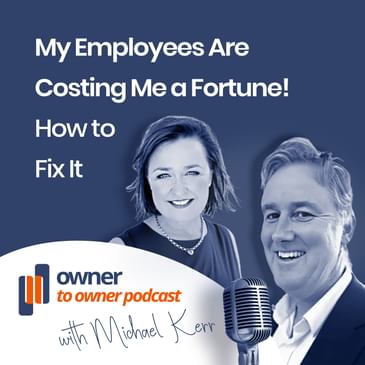
@Natasha Hawker founder of @Employee Matters discusses the importance of employees in small businesses, and the impact they have on business performance. Natasha emphasizes the need for exceptional HR practices and the role they play in driving business growth and sustainability.
She also discusses the current employment relations landscape and the importance of compliance. Natasha provides insights into the red flags that small business owners should be aware of and the benefits of outsourcing HR services.
She concludes by discussing the significance of employee ownership and the role it plays in business success and potential sale. The conversation explores;
- the importance of investing in personal and professional development for both business owners and employees
- the need for business owners to have a growth mindset and actively seek opportunities to learn and improve
- the benefits of employee ownership and how it can increase engagement and motivation
- the significance of creating a compelling employee value proposition and fostering a transparent and inclusive work environment
- the use of advisory boards and networking with other business owners is also recommended as a way to gain valuable insights and support.
Natasha made it very clear how your employees have such a significant impact on the performance and success of small businesses. This short video beautifully categorises the 4 types of employees and provides a framework for business owners to better manage their #employeeassets.
https://share.vidyard.com/watch/qVFVgq3EKyYakjSjQkGCEN?vyetoken=fa04c069-8443-4adb-b9b9-c9ca0dae4ae4&portalId=20625731
Takeaways
- Exceptional HR practices are crucial for business growth and sustainability. For more information on better managing the 7 main HR risks you should read this ebook from Employee Matters (https://app.hubspot.com/documents/20625731/view/791072601?accessId=a9b9bb)
- Small business owners should be aware of red flags such as pay secrecy and compliance with employment relations legislation.
- Outsourcing HR services can provide expertise and support for small businesses without a full-time HR resource.
- Employee ownership can contribute to business success and potential sale. Investing in personal and professional development is crucial for business owners to improve their skills and knowledge.
- Employee ownership can increase engagement and motivation among employees.
- Creating a compelling employee value proposition and fostering transparency and inclusivity are important for attracting and retaining high-quality employees.
- Advisory boards and networking with other business owners can provide valuable insights and support.
Thanks for listening. Visit the Owner To Owner Podcast website to subscribe, listen back, or check out any resources or information mentioned on the show.
Search @ownertoownerpodcast on your favourite podcast player to subscribe and listen to the episodes.
Reach out to Michael Kerr via the website if you need personal assistance or advice for your small business.
michael.kerr@kerrcapital.com.au
www.ownertoownerpodcast.com.au
Connect with us:
Website: ownertoownerpodcast.com.au
LinkedIn: Connect with Michael Kerr
Share Your Story: Want to be a guest? Apply here.
Disclaimer: The information shared on this podcast is for educational and general information purposes only and does not constitute financial, legal, or professional advice.
[00:00:00] Hi, it's Michael Kerr here presenting Small Business Banter. Welcome to the Small Business Banter podcast. I'm Michael Kerr your host and I'm also the founder of Kerr Capital where I work day-to-day with business owners.
[00:00:21] The Small Business Banter podcast is built just for business owners and will be especially relevant if you're an owner looking to sell, if you've been unexpectedly approached by a potential buyer or if you're an aspiring owner about to buy a new business.
[00:00:37] There's a lot on the line personally and financially. It's stressful, it's emotional and it's usually new territory. So to help each episode of Small Business Banter is a discussion between me and another business owner or an experienced small business advisor. We talk about their experiences.
[00:00:58] So what you'll get is practical real life advice, different takes on everyday problems and a renewed confidence to tackle your own business challenges. Welcome into Edition 143 of the Small Business Banter podcast. Natasha Hawker, welcome in today.
[00:01:31] Thank you Michael it's fun to be here. I've done a podcast for ages. Yeah well we're just talking about having a doing this on what seems like a modestly sort of quiet Friday that just after ANTAC day.
[00:01:46] So yeah a bit of a, absolutely a lot of people have taken a long weekend but you and I are hard at it recording and we're going to be talking about your business,
[00:01:56] or your business, a lot of the topics are going to be around employees in small business, the outsize impact they have on the performance of the small business on the owner themselves, how we might deal with that.
[00:02:13] So how about you give us some, a bit of a summary of Natasha Hawker and your business employee matters and your role in the employee space with small businesses particularly, medium businesses.
[00:02:29] Yeah so my career actually started in backing in finance working in dealing rooms which is a long time ago when late 80s early 90s when greed was good and that was quite an awakening to all sorts of employee issues straight out of school into that.
[00:02:46] You were trading on the desk?
[00:02:49] Yeah I wasn't the trader, I was the settlement's part but we were trading millions of dollars and I can remember thinking Michael they're talking another language like I had no idea what I was doing and we would be back late at night trying to find money to balance you know
[00:03:03] and that's when people used to run around the city with checks handing them over to exchange stock whether it was a semi-government bond for you know five million dollars it was I felt like a payment play money but it wasn't obviously and it definitely wasn't when we were still trying to balance the books at ten o'clock at night.
[00:03:21] Yeah I'm from there what?
[00:03:23] Yeah so there I moved I became a recruitment consultant and that's how I learned how not to run a business it was very aggressive you know we used to run a book on how long the latest recruitment consultant would last and it could be anywhere from one day to three weeks and it was fascinating
[00:03:41] and it was just a very cutthroat industry in those days it was all about the sales all about putting bottoms on seats and taking a fee for that and what I learned there which was fascinating was that I wasn't good at cold calling but once I had a client had them for life.
[00:03:59] I was really good at the relationship side both from the candidate side but also from the client side so I did that and then I got my lucky break I joined Accenture and I got to travel the world I was with them for the best part of twelve years I was in A-PAC roles I travelled up over Asia delivering training I was lucky enough to go to the US and roll out a new executive hire to you know new managers that had to
[00:04:29] been hired from all over the world and then I transferred to the London office I worked in the London office for a couple of years in the resources market unit and then went down to India and was the interim HR manager down there when we were hiring 500 people in five weeks fascinating experience
[00:04:47] I had a whole team that had never worked for a woman before and they were all going to get married before me but none of them had met their partners yet and I'd happen to meet my now husband who you just met in the green room and we were sorting out my IT and I'd met him in three weeks later he proposed and then I ended up on a plane to India to work for the next couple months but that's a story for another time.
[00:05:06] My husband and I started Employee Matters Michael gosh 12 and a half years ago now we have 17 I think 18 people across the strain New Zealand and the Philippines we provide HR recruitment, HR information systems support to small to medium businesses who either don't have a full time HR resource nor do they need one or they do have a junior HR resource and they need some extra level of expertise.
[00:05:36] To help with some of the more tricky matters and as you know at the moment there's so much in that ER space.
[00:05:42] And I think you know I'm really passionate about HR I believe that exceptional HR doesn't just fix or even prevent employee problems exceptional HR is your competitive edge for more profit more growth and the sustainability of your business so we're very business focused it's about results and who doesn't want more of that.
[00:06:00] Yeah well and if you're going to get results in a small business in the main you're going to have to get more from your employees and engagement productivity enjoyment you know willingness to come turn up so yeah and you're squarely in just under the I think you said up to 17 or 18 employees with a few outsourced but you know that traditional definition of under 19 is where we.
[00:06:30] Cut off you know the small medium enterprise yeah from a HR perspective it's 15 and under and that includes casuals you know so a lot of the legislation has small business and typically.
[00:06:42] You know it just means you get more time to implement the stuff that the bigger end of town has six months and you've got 12 months you know before you need to implement so that's the advantage of being a small business there or that you don't for example have to pay redundancy if you're under 15 heads.
[00:06:56] That's a good one you know because redundancies can be very expensive.
[00:07:00] Yeah yeah you know interested the 15 like that the size categories have been around for some time haven't they and then we get another one which is probably you know being under 15 for those laws and you know another question for me you know what you know what can't we you know these are some of the things that just make it just a little bit more.
[00:07:25] Tricky you know as to where you sit anyway the motivation for you a mark to start employee matters you went from trading trading room to almost like trading people sound like in the HR.
[00:07:41] I run a temp desk it literally was trading people trying to get people into jobs. Yeah and it was that that seed this desire to start something and really and help you know small business owners get more from their business more from their people.
[00:07:58] Yeah I mean we started as I said over 12 years ago I could see that there was a gap in the market and I knew that what I knew could help small to medium businesses do it more easily like I have a friend and I often quote her because I think it's very real.
[00:08:12] I can never forget she said to me one day Michael she said running a business would be so much fun if I didn't have employees and she's not alone.
[00:08:21] A lot of people think that and I could see there was a real gap in the market where SMEs didn't have access to HR and recruitment and that limited their success because you may be in business because you're passionate about what your business is but once you start getting people you potentially get problems.
[00:08:38] So Mark and I actually he had a career in banking and finance. He worked in Coots in the UK McCrary Bank out here and leveraged equities. I think I look back at it now and it's like we sold our brand new care carnival.
[00:08:53] We had three kids for an under to start the business.
[00:08:56] We then sold our house in French as far as to continue it and you know it's very much a husband and wife team and I've had a lot of people Michael said God I could never work with my husband or God I could never work with my husband.
[00:09:08] Mark and I are quite lucky we are both very good at what the other one isn't good at. And I think you know starting and building and sustaining a business is really really hard.
[00:09:22] And I think to be a business owner I think you need to be incredibly resilient. You got to take those knocks quickly get up dust yourself off and get back to it.
[00:09:31] I think you have to be incredibly optimistic to know that with hard work and effort it will turn out okay in the end.
[00:09:37] And I think you need to be a little naive because I think if we knew then what we know now we may not have been brave enough to start.
[00:09:44] And I think you know I think that naivete is key because I think a lot of people you just don't know what you're getting yourself into. You really don't.
[00:09:52] You've made you both have already made significant sacrifices and that you know mentality psychology of it's just around the corner. You know there's a bit of naivete maybe but you know that's what feels a lot of small businesses.
[00:10:10] But I think to your point what continues to intrigue me deeply is that what it takes to be an owner and a founder and to continue through all the hard times. I think can also be a biggest negative when it comes to your expectations of others.
[00:10:32] When you're working with family you know that's maybe you have an maybe there's established communication channels and it can be a bit easier. But fundamentally when you're going so hard and you make those kind of sacrifices you both made selling a house selling a car key accountable.
[00:10:52] Then how do you then kind of deal with employees who might like their job might be pretty good at it but probably aren't going to go the extra mile and the extra mile and the extra mile again to do what you might have done as an owner.
[00:11:08] That's seems to be the root of a lot of challenges for me with owners and their businesses.
[00:11:16] Yeah I think you know it's interesting my I've got two general managers in the business and both of them have said to me when recently I could never have done what you do.
[00:11:26] You know in terms of the risk that you talk particularly with a small family and think about the statistics Michael.
[00:11:33] I think it is 50% of businesses fail in the first 12 months another 50% fell in the next 12 months and only 7 1% of businesses in Australia get over to over a million dollars worth of revenue in the first seven years. And we did that.
[00:11:46] But to your point I think I think you have to recognize that when you're in it and when you own it.
[00:11:53] I often joke over the years I think I could earn more flipping burgers at McDonald's than what I have but equally I'm passionate about I mean I have an office at home that's well set up that's what you're seeing here.
[00:12:05] And my husband often has to come and drag me out because I love what I do.
[00:12:09] I come and tinker here you know and it's building something and I get such a buzz out of the learning and such a buzz out of seeing where we were even 12 18 months ago six years ago. I think with the people side of things. I have.
[00:12:28] I firmly believe that your employees are greatest asset they're also potentially greatest liability and should be treated as such and I think what we've done really well is build a team of people that really value. Mark and I value our business value what we're trying to do.
[00:12:45] And we treat them well you know Christmas for example.
[00:12:50] We said you know we actually picked individual presents for everyone in the team so for example Peter who's our BDM is he's got his RV you know he and his wife have bought an RV and they want to travel around straight so we bought them like a.
[00:13:06] Those big four caravan park things like a voucher for that. David GM had a sickly dog so we bought him and Marissa a couple of days away to place it to take dogs you know so you know I think being.
[00:13:20] Thoughtful like that really helps but then we're also about giving back so we got them to everyone to do a half day which we paid for to go to a charity of their choice.
[00:13:29] So but at the end of the day Michael employees are different they have a different mindset I share an enormous amount with my team which often worries business owners like we have a dashboard shows our revenue shows what we're billing each month shows everyone's chargeability and people are like oh my God why would you give them all that information.
[00:13:48] And maybe one day someone will take advantage of that but the lift that you get from being open and transparent and the engagement increases I think is far higher and at the end of the day I always say to business owners if someone's not doing their job.
[00:14:02] It's perfectly reasonable for you to performance manage them and you might want to performance manage them out of the business and then you'll probably find everyone else goes Michael why did you take so long to do that we should have done that ages ago.
[00:14:14] Well yeah that's that is a challenge I think there are some owners that are probably you know more naturally inclined to be able to deal with that scenario conflict potentially to get someone out of the business and others just maybe step over it and ignore it.
[00:14:32] I hope it goes away. La la la la.
[00:14:35] But so that's the environment we find ourselves in now and then where your business employee matters since it must be a lot of opportunities for you to help owners migrate through all of the I don't think we've got time to go into all the challenges and the legislation and the compliance requirements.
[00:15:04] That's probably not the you know the purpose of the podcast that you know to dig into those things because people can you talk about that on a regular basis and I encourage people to have a listen on it. You're on ABC recently and yeah.
[00:15:20] But the point of you know what we're trying to do is is to encourage owners to think about they don't have the bulk in most cases to have a full time HR manager. There are lots of issues challenges.
[00:15:39] There is a solution and it's called you know outsourcing or outsourcing to someone like yourself so what are the kinds of things you do for typical small businesses that might give an owner listening a bit of a sense of maybe that this is something I want to think about.
[00:15:58] Yeah good question. I mean it's interesting Michael. Most people come to us with a problem. You know somebody's done something at the Christmas party they shouldn't have done or someone is not performing and I need to make them redundant.
[00:16:11] It may actually be a performance management issue and the other big one and I encourage all of your listeners to think really hard about this because I am concerned is there is the most employment relations change since fair workers introduced back in 2009.
[00:16:27] I kid you not and the vast majority of businesses I'm coming across Michael are not aware of that. So just at a really high level. You know there's people at work respect at work in the past you just put a policy in place tick.
[00:16:41] Make sure everyone knows about that this time the legislation has been changed to be super proactive so you actually have to do a risk assessment of what's Natasha's risk of getting sexually harassed and then ask Natasha and I'll just go back to the
[00:16:55] and then ask Natasha and other team members what their risk is and then mitigate those risks. So typically what we do is we come in to help a business we have a tool called employee metrics it's a diagnostic tool.
[00:17:07] We actually won't work with anyone Michael unless we've done that diagnostic first and the reason for that is that we have something called accessorial liability so if I come into your business and I say Michael I think you're underpaying your employees and you go yeah Natasha I'll fix it and I keep working with you and I know you haven't remedied that.
[00:17:25] I am also personally liable so it's pretty major and so as an example that legislation change I'm talking about if you have not done that and most of it was required to be done some of it as far back as 2022 the fines for you personally are up to 19,000 and for the business up to $90,000 per breach.
[00:17:46] So but most business owners are not going to want to sit there and read through pages and pages of our legislation I wouldn't want to either so what we do is come in and do that for the business.
[00:17:56] So that tool metrics will say I think you need 10 hours a month you could increase it decrease it or kill it at any time if you're not getting value but what we're doing is transferring that knowledge to your managers too so they understand how high and managing exit better and that really helps because we talked about productivity at the beginning all boats rise on the tide if you're
[00:18:15] not getting value but managers aren't confident in those skills then there's going to be an issue. Hi there it's just a quick interruption to the podcast and it's a message from Kerr Capital a supporter of the podcast.
[00:18:29] If you're a business owner thinking about selling and you're unsure about what you should do well the worst thing you can do is jump straight into an unprepared business sale cross your fingers and hope for the best.
[00:18:41] If you want to take control get a sense of what your business is really worth and a plan to make it more sellable then head over on to the Kerr Capital website check out the value and sellability diagnostic.
[00:18:54] If it piques your interest contact me Michael Kerr or book one of the free 45 minute diagnostic calls now let's head back to the podcast.
[00:19:04] So what would be the top couple of things that really are red flags like I would has it a guess that a lot of the owners I work with.
[00:19:19] I say mostly you really do care about the employees run a reasonably successful sustainable business may not be doesn't have to be hugely profitable what has to might have been around mostly that been around for 20 30 years so doing something right.
[00:19:39] But you know I feel like there's this you know always going to be things that just for whatever reason don't get on the radar what are the ones that you would say they ought to worry about and do something about.
[00:19:53] Yeah so here's a couple of quick ones at the moment just because they're so topical pay secrecy so everyone literally flinches when they think about this but in the good old days we used to have a gag cause in all our contracts that said on pain of death like you cannot tell anyone what you're earning.
[00:20:11] Now that has to be removed from the contract otherwise you're in breach and I can actually ask you and say Michael what is your salary that you're getting paid.
[00:20:19] And you don't have to tell me but if you do tell me and we're doing exactly the same job and I actually think I'm performing better than you then I need to be paid either the same or better than you.
[00:20:30] So I think for businesses is the first thing is a salary audit to make sure that they comply from a legal perspective around are they paying correctly under their awards but also a bit of a salary audit that says if we've got two people three people four people doing the same job.
[00:20:45] Are we paying them correctly.
[00:20:47] I think the other big red flag for me is going to be around this respect at work and the people of work legislation people at work is very much around mental health in the workplace as psychosocial hazards so you can't overwork anyone anymore you can't underwork anyone you actually have to give people feedback.
[00:21:04] Having great job descriptions so that people are really aware of what they can and can't do a couple of weeks ago I was talking about right to disconnect on sunrise and you know that is going to be a piece of work the business is going to have to do because you can't just call people up at nine o'clock at night because you feel like it.
[00:21:22] Not that everyone does that but you can't do that anymore but there are reasons why you can call someone so you know I think there's just a lot happening in the space. It's still a very tight applicant market although I see that starting to change.
[00:21:35] I think we're seeing with the recruitment we're doing the volume of applications is increasing which means there's more people floating around looking for work.
[00:21:43] The other big one is getting people back to the office so I think you know a lot of organizations are really trying to put their foot down and go we want everyone back five days a week.
[00:21:52] I think if you do that you'll lose people so it's really key that there is an attraction strategy around and some thought around why do we want people in the office because people are like well I did it from home for the last 12 months or eight months or two years why do I suddenly have to be back in the office now.
[00:22:08] So you know that collaboration piece and gamification around why you come to the office is important then I think most businesses are really getting stuck around two or three days that's about as best they can do. Yeah okay.
[00:22:22] One of the things is that would you typically do a diagnostic that diagnostic you talked about just to set the same for an owner or owners?
[00:22:33] Yeah it's great because what it does Michael is it gives them a traffic light report, green amber red and all the recommendations some of which they go oh I didn't know that but now I know that I can go and fix that.
[00:22:43] I don't need employee matters to fix that but what we do do is we do that at the beginning of an assignment and then we do it at the end of 12 months and we can say well you're all green and orange when we met you in our all green.
[00:22:54] So it's an accountability piece for us but it also produces a people HR roadmap so it then says right here all the things we need to do in Q1, Q3, Q4 whatever to make sure that you comply.
[00:23:06] So it's much far about being proactive around your HR because what I find is if you're proactive you get less of the reactive stuff which is the time consuming expensive stuff.
[00:23:16] Yeah I think it's getting those unknown unknowns into the you know you don't know category but also I think like most of the work I do is with owners of businesses and they've been at it for 20, 30, 40 years
[00:23:33] or they're fast growing and they get approached out of the blue to sell their business but I look at their numbers and you know no surprises the percentage of revenue that comes or is allocated to salaries is the highest other than like really high in manufacturing
[00:23:55] but largely you've got this and so therefore and it's like it's just cost but also that's where you're going to potentially drive a lot more from the business.
[00:24:07] And so things like you just mentioned before doing an or chart and something as simple as that I'd like to characterize that as as a bit of infrastructure if you haven't done it and it's driven by compliance that's okay because the payback can be
[00:24:25] this is you've got a better feel for the way your business is structured you've got job descriptions flowing from it which you can feed into performance reviews into budgets into success and so
[00:24:39] you know no doubt some owners will think this is another piece and there's another piece of legislation I've got to worry about but also how do we flip that around so that you're on the front for it
[00:24:49] and complying but also you know getting a return on that you know that time and money is spent on it.
[00:24:57] I look I think Michael one of my concerns and I built my business to sell I have been quite strategic about it and intend on selling and I have my exit price and all of that sort of stuff.
[00:25:07] I think what many of your listeners may not realize is this isn't an investment in getting maximizing the price when they go to exit like the first thing they're doing is due diligence and they're going to go through those contracts
[00:25:20] and they're going to go through those people and work out what it looks like.
[00:25:23] I think one of the great we use a little recall on an employee ROI calculator and one of the best things your listeners could do is okay what's my revenue I'm going to make the mass easy for me so it's $100,000 a year
[00:25:33] and I've got 10 employees then at the moment the view is that you should be getting a three to four return on each employee on average. So if you've got 10 employees and you're owning 100,000 that means you're only getting $10,000 you should be maximizing that's why isn't it $30,000 return or $40,000 return.
[00:25:55] Obviously sales guys are going to have a higher return rate than what your admin person is but I think it's really, really important that businesses see their people as an investment and if they are looking to sell it's really, really important that they're compliant that there's no risk sitting in that business
[00:26:14] because otherwise it turns the business that's potentially the buyer off.
[00:26:18] Yeah look in a lot of businesses employees are vital today and you can get more out of them but certainly on transition of that business from one owner to another it's where this is really a tricky point where the owner's got to go through all of that stress about thinking about selling
[00:26:42] what am I going to, you know how am I going to make sure that all my customers stay with the business because the deal won't go ahead or won't be priced the right way but it's always, in a lot of cases staff has such a massive influence on the outcome of that sale process
[00:27:02] and I do want to get to talk to this idea of employee ownership which has kind of been around for a long time but I'd love to get your perspective on how you see that helping businesses sustain themselves
[00:27:20] but I just wanted to reintroduce and mention we're chatting with Natasha Hawker today from Employee Matters on the podcast so with that said this idea that you're going to invest now for
[00:27:39] and you get your return when you get a better sale price what about that period you're an owner you're driving with Mark to get this business ready but when you're maybe 10 years away I'm not sure where you are in your thinking about that
[00:27:57] but if you're still 10 or 15 years away from potential sale what's your kind of thoughts for an owner thinking about spending money on it?
[00:28:06] I actually think you never know when that offer is going to come so you actually want to make sure your business is ready to go no one picks the time when someone's going to tap them on the shoulder
[00:28:15] I've already been approached a couple of times now it hasn't come off yet and the interesting thing is Michael that I'm sharing this under the kind of silence with your listeners is that everyone thinks we're bigger than we are
[00:28:27] and I think that's interesting because then perception that whole perception versus reality so what do you need to do?
[00:28:34] I think you know if you were getting a business ready for sale in 10, 15 years I think you actually need to get it ready for sale now so that it makes the sale more likely to go through
[00:28:43] I think you don't want them opening or going under the hood and they will go under the hood in a lot of details and finding your contracts aren't right your policies are out of date they've still got five days domestic and family violence leave when it's 10 days now
[00:28:57] You have not you've got a group of B players we call that I'm going to actually send you to put in the show notes Michael I've got a little video on the employee commitment model and it talks about prisoners and conscripts and volunteers and trainees
[00:29:10] you want to have as many volunteers superstars in your business you don't want the new business owner coming in and going my god there's a whole lot of D players in here why am I dealing with these people
[00:29:20] so I don't see it as a future thing I see it needs to be done now so that if somebody does tap you on the shoulder you are good to go
[00:29:29] I'm looking I'm always looking to buy a business you know I'm still looking for businesses all the time to grow my business exponentially and there's a great time to do that at the moment there's so many baby boomer businesses are being exited from
[00:29:43] I think you absolutely spot on with that observation and a lot more of the work I've done in the last few years has been and it's because I've started to focus on it there
[00:29:54] there's a really negative unplanned exit where someone has a catastrophic failure in the business or they just give up or it's too hard or whatever
[00:30:08] but then there's other things which is happening if you've got a reasonably high performing business there's no question that in a lot of the industries that will come across
[00:30:21] there'll be a bigger player eyeing off just like you said smaller players or even you know similar size to take advantage of opportunity
[00:30:32] so you're for all the good work and you should obviously think about when ideally would want to exit and what you should do to drive a better outcome for you
[00:30:43] but you just got to be ready because the opportunity may just come completely out of the blue and it does all the time
[00:30:51] and then you don't have to dive into due diligence straight away but if you get caught on the hop because you haven't done any of this stuff it just affects your price yeah
[00:31:05] the end of the day evaluations decrease you know one of the reasons and even think about it like one of the reasons why we have products that are monthly reoccurring revenue kind of products is because that increases my valuation
[00:31:17] professional consulting firms are two to four times if you've got monthly reoccurring revenue that's more like 10 to 14 times so that is a great example of something that I've implemented early because I want to increase my valuation price at the end yeah
[00:31:32] yeah you know it's like it's clever and smart and you know I guess it's and it's also you know you've got to you've got to have that nice balance between you know paying the bills now and you know invest because it's not easy to you know to
[00:31:51] to you're almost running like a sass or a software business you know maybe it's a quasi software and you know almost like a professional services thing that so yeah it's excellent to hear that
[00:32:05] with regards just generally getting employees involved in some way whether it be as a owner or as part of an incentive plan open books what's your thoughts on that because it can get well does always get tricky if your employees feel like they're being
[00:32:31] they're uncertain about their job going forward if the business is sold but I've seen often where key employee and there's always some really key employees and they can they can have a major influence on the
[00:32:44] on the whether a business sale goes ahead or not because they you know the carrying the responsibility for key activities in the business when the owner is not there so your thoughts on getting them old now
[00:32:58] yeah I think the key the key from my side here Michael is that they're you build in systems and you build in tools so an automation and if you can systemize as much stuff as possible that also helps you as the business owner exit more quickly rather than being handcuffed into the business for a long time
[00:33:19] I do think it's really interesting around employees and they're buying and they are critical because you know the only way you can grow a business is to delegate you know those owners that keep everything to themselves reduce the ability of their business to scale
[00:33:34] and that's challenging letting go to trust people so higher well you know it's absolutely key there so I think you know in terms of your questions did you want to talk about share ownership now is that where we're going
[00:33:48] I think so because you know it's been around for you know different forms of worker employee ownership has been around for a long time but you know I kind of look at the numbers of SMEs at the moment I think we're you know call it 2.5 million or something
[00:34:06] but yeah 60% or more of them are zero you know employees and I champion the idea that you be self sufficient but and then you know in the end there's not there's I think that in 8% of the 2.5 were call it 5 to 20 employees this is roughly speaking
[00:34:26] so the value of these really strong emergent small businesses you know there's not an awful lot and I wonder if people some owners just saying I never want to grow so I'll just stay by myself that's okay
[00:34:44] but where what's to get that some that small smallish number of small businesses up to being a medium or a large what we need to take more than the owners yeah common owners I've got a very strong view on this I have invested personally well over a quarter of a million dollars in my own business education
[00:35:04] and I would not be sitting here today if I hadn't done that and that's everything from negotiation skills to business coaching to my AICD course to media training you name it and I because when I started my business I was great at doing HR and I often say when people come to me now like on they go I want you to do my HR and I can do you don't
[00:35:24] my team are infinitely better at it than what I am I've been off the tools for a while so it's really really interesting and I think that is holding businesses back because they don't know how to grow their businesses they haven't invested in themselves or invested in someone that can take them to the next level
[00:35:40] in terms of that employee ownership part it's a really interesting one because I think that it's very it can be very attractive at the right time for the right employees now you don't want to offer it to everyone because you want to handpick the people who you think are long term employees who are adding value
[00:36:00] to that and I think that the business owners always have to have that mind of okay well I can get my business to this size on my own with no investment and potentially if I do an employee share scheme whether it's them buying into the business or it's a gift however you want to do it
[00:36:20] I'm going to be giving away a small chunk of my business and mentally that can be a little challenging for some business owners but if it's a piece of you know it's a 5% piece of the pie and the pie is worth $10 million versus $1 million and you own all of it then there's some food for thought there.
[00:36:36] I think from an employee perspective nothing gives them greater pride or motivation or initiative than actually owning a small bit because most business people come to me and they go I could never start my own business I could never do what you're doing.
[00:36:50] This is a way that they can do it in a very relatively safe way but it will definitely make them go above and beyond and maybe call out you know a workplace health and safety issue because they are there in the trenches with you it's part of their business and it's you know it gives them cause for actually making sure that the business does do better because they're going to get rewarded out of it.
[00:37:15] I think you and I would disagree there's a lot of other small business advisors that would violently agree that if you could get that hyper level of engagement through some level of ownership or sharing the rewards of the business everyone's better off.
[00:37:37] The interesting conundrum sometimes is that and it's the power of doing exit planning for you as the owner because often employees are the natural can be the natural owner of next owner of the business and so that can be you know a way to kind of mitigate all of potential risks we've talked about.
[00:38:03] So bringing them in early with a share knowing full well that they have a fairly good say someone who end up buying the business if not them and so then you're exit planning to the employees or the key employees.
[00:38:23] So that's really about the owner saying early days having a look at who's going to buy who should buy the business who should be the natural next owner and what you know what if I don't sell it to the employees what's going to happen to the business.
[00:38:39] I think there's another way of thinking about it to Michael and it's been a strategy I've been playing and it's helped me grow my business 20 to 40% year on year is around partnerships with working with people who have your clients before you do.
[00:38:51] And for small businesses they're often hamstrung by the fact that they don't have great marketing budgets or they don't have a marketing person and they run out of connections.
[00:39:01] And you know an example of you know if you work in professional services you might talk to an accounting firm and partner with an accounting firm and they might start sending you clients their way they might also potentially be a purchaser of your business.
[00:39:14] Yeah, fair point and this comes from being active and not falling for the trap of I'll sell when I'm ready on the line.
[00:39:27] And you know in that thought you don't have to commit to doing anything about selling at a specific time but you do need to be a couple steps ahead. I took this what all we're saying.
[00:39:42] What about just to slightly shift the conversation how ready are employees to you know how willing to become owners to be owner ready if there's I'm just throwing out a term there but because you mentioned someone just a minute ago that I couldn't have done what having my
[00:40:07] own business owner had done and gotten you know intimately aware of what the owner went through. I couldn't have done that but is there something you know that whose responsibility is and how do you get employees who might have this idea that they might be an owner one day?
[00:40:25] How do we kind of make that happen faster? I think conversations I don't I think many business owners undervalue what keeping their team close and investing in their team and mentoring their team members to start to sprinkle the idea.
[00:40:42] You know if you've got your superstar employee who you've identified as your predecessor sorry your successor then you know maybe take them out for dinner and start to sprinkle some ideas with them because they may never have thought about it.
[00:40:58] You know it does take a certain type of person to start their business but you know start to have those conversations with them. Start to help educate them invest in their professional development give them books to read that are around you know business ownership.
[00:41:14] Get them if they're great technically on one side of things get them to understand the financial side of things you know bring them into the business and understand you know the P&L and the balance sheet and what impacts that has because they'll probably stay with you for longer because even if they don't end up becoming you know your successor they're going to be much more
[00:41:36] born into the business and if they have that broader skill set much more useful to you in the business as well rather than the narrow thing they're doing at the moment.
[00:41:44] Yeah it sounds like you do have that open book to start you know to a large extent anyway and you know and we're you know I as a health creator sense we're all in this together because the business is striving for something and pretty much every moment of the day you can move the dial if you
[00:42:04] you know if you're thinking about it. Absolutely. Absolutely. In terms of the we've kind of covered both employees you've invested in extensively in yourself personally as it to become a better owner or more effective owner you've got a plan we've talked about employees
[00:42:33] what's the if there is a bridge to cross between employees and employers is what are the things you talked about open book finances what other ways can you endorse to get them closer.
[00:42:57] Yeah I think you know if I think about what employers need to do to run their businesses better thinking about their employees. I think you need to have a very compelling employee value proposition Michael which is why your organization is great place to work.
[00:43:13] This helps with recruitment as well because at the moment it is still a very tight up look at market which means this still it's changing but it's still a shortage of those high quality employees that you want so those organizations that can not only articulate
[00:43:27] it and put that in their ad but also their hiring managers are able to articulate why this is great place to work because you're competing against your competitors who are also trying to avoid this person as well.
[00:43:38] That's really really important. I think organizations that are transparent that train their people. I'm always at the view what doesn't get measured doesn't get done so you know I think we did an amazing job of moving to working from home overnight during COVID what we've not done is do it so well with those organizations
[00:43:57] or those individuals that are continuing to work from home you know how do you measure that performance and make that happen well. I think you know that transparency and that mentoring you know bring people on the journey with you
[00:44:11] you know as an example we had our best financial year last financial year so as a surprise we had our team day which we do every quarter and we bring our remote team together and so we said to them okay we're going to do some professional development in the afternoon
[00:44:28] and then you need to be at this point at this time and next thing a large catamaran boat comes around and we take them out on the harbour for vivid. Now that whilst that's an expensive little exercise it does bring a lot of good will you know when I have to ask someone can you pick up this extra client I know you're a bit busy at the
[00:44:49] moment but could you just do it for me I need a favour they're more likely to do it because they see that you know we appreciate what they're doing and that we acknowledge what they're doing. Yeah you're creating a great place to work. Do values how much.
[00:45:08] Yeah I think values are key and I think a lot of people have values but they don't pay any attention to them and I think it's really important that your team are aware of what your values are and you know we haven't been doing it so much recently but we used to say give me an example of when you've lived a core value this week so ours are flexibility employee
[00:45:31] matters you know commercial and trying to get them to link back what they're doing that has an impact on the values and hiring for values is really really important it's there's nothing going to bring a employee employer relationship unstuck quicker than when there's a values disconnect and I think classic example of that Michael
[00:45:53] and we see it happen often is where a very senior person who absolutely can do the job standing on the head goes into an organization and shoot straight back out very very quickly and that's generally it's a values issue or a cultural issue that they've got this is not the place for me.
[00:46:11] So there's too much focus on the job description the KPIs but not enough about what kind of organization and people we are versus you know what who you are personally.
[00:46:25] People leave leaders not organizations so it's really important that your leaders are great leaders because they're the ones who are and this is a bugbear of mine you know we touched on at the beginning I really believe most managers in Australia and that's not all their fault just don't know how to do three things higher
[00:46:43] manage and fire better and if they could just do those three things better your productivity with lift and a large part of that is that we have an investor we often promote people to their level of incompetence often and or we give them a management title and say there you go there's your team and they're like never on the team before how do I do this and so you know teaching them how to motivate people how to train them how to get the most out of them is really really key.
[00:47:09] Yeah I think what comes through strongly for me is that you have spent a lot of invested heavily in your own development and therefore you know we don't have all the answers none of us have all the answers and we can all get better employers, owners, employees every you know it's just creating that incentive you've got a very clear one you know you're running a great business and for others it's
[00:47:39] not so clear unfortunately. In your team you've got a mix of you've got some outsourced he's at offshore remote.
[00:47:50] So the team is my EA Kathleen who's excellent I love Kathleen she's based in the Philippines and she's worked with me for about two years amazing. I have team member in New Zealand and she's a contractor because she's in New Zealand and then most of my team are Australian based and they're a mixture of casuals and perms out the difference with us is our people come to us Michael and we say how many hours a week do you want to do that.
[00:48:20] I work and they go 24 and then we build a portfolio of clients around that that is very different now it was unique when we started it 12 years ago.
[00:48:30] Obviously COVID has meant businesses have become more flexible but still there are very few organizations that say you tell me how many hours you want to work and we'll work around that and we've seen people ever flow you know between having a baby and not having a baby or whatever.
[00:48:45] We have been very successful hiring people who are in that childcare rearing stage that just need to take a break from corporate because often what happens is they get a part time job they work full time and get paid part time for it is the risk.
[00:49:00] And then we've had a lot of very successful employee experts come to us at what I call the twilight of their career and they're not ready to hang up their boots just yet and they want to keep delivering and it's that transition into retirement which works really well as well.
[00:49:16] And the clients get the benefit of that 35 years experience.
[00:49:19] Yeah there's a lot of excellent so watch it very clearly demonstrating that the traditional hierarchical structure of full time employees has just been completely unwound in the particularly in the last you know since through COVID and so you can tap into fractional resources.
[00:49:41] You can tap into part you can even say how can you add value to my business and have me ours.
[00:49:47] So yeah you've got to be creative but I think if you know what you're after and what you're trying to achieve as a business it probably makes that a bit easier. Absolutely.
[00:49:58] Just living the day to days going in and smashing it up against the wall is hard work. Natasha I look really insightful chat from someone who's an owner small business owner who works with other owners. I'm sure a lot of that will cut through.
[00:50:21] I just wanted to give you the opportunity to do a couple of things. There's sort of resources. You've you've you've written a book. Yeah.
[00:50:35] Talk about that and talk about you know my my audience that I that I want to speak to and I want to help directly by having them run a more sustainable business to you know on their terms.
[00:50:52] Where would you is it is it to go for personal professional development. What are your what are your sort of top things to say to a known if you're in a bit of a rudder we're not quite sure do these few things or try these few things.
[00:51:08] So from a from a resources that could help from a HR perspective. Yes you're absolutely right.
[00:51:15] I wrote a book called from higher to fire and everything in between and that is built around our nine step employee life cycle which is higher managed policy well being engagement training measurement and exit.
[00:51:28] I think that's them that employee metrics that software that I was telling you about that diagnostic tool that's also built off that so it's a great way to have a look under their hood and make sure you're compliant.
[00:51:37] I also have a podcast called employees matter and so there's some things that you could get some help on our website.
[00:51:46] We have an ear what are your top seven risks from an ear perspective at the moment really good for businesses to have a look at that because I would suggest many of our listeners today aren't compliant and it really worries me because a fine of something like that.
[00:52:01] And I'll give you a really quick example and they were horrible employers. So it's a worst case scenario but there was a tide takeaway in Sydney for shops. They had a lot of vulnerable migrant workers.
[00:52:16] They were systemically underpaying them falsifying records and the HR manager was complicit with it. Their fine was four million dollars for the business owners and the business and a hundred and five thousand dollars personally for the HR manager that had done the wrong thing.
[00:52:31] So you've got to get this stuff right. It was an important HR manager not it that wasn't an owner that was that was a HR manager. So here's the thing managers are at risk. So if you are for example let's give another quick one.
[00:52:46] Domestic and family violence 10 days leave but the key with this one is Michael that it cannot have on the. A piece of it that somebody took domestic and family violence because that goes on to the perpetrator.
[00:52:57] So you've got to make sure and it's on a confidentiality needs to know basis. So if you know breaches around that you know if that would be a breach that had it on the pace.
[00:53:08] You asked me about what I would suggest has been the most successful or helpful things I've ever done.
[00:53:15] I think in the beginning it was business coaching because I hadn't I didn't know how to run a business at that time I was good at HR and had absolutely no idea what I was doing from a business perspective.
[00:53:26] So I think that was really helpful for me and I don't know whether this is more me as a woman business owner or a female business owner. I didn't get better at negotiation skills. So I read a book called Never Split the Difference.
[00:53:40] I then went and did coaching with one of their black swans a guy called Derek Gawd who I absolutely loved. And I've just had a cup of tea arrived from my wonderful daughter. Thank you. And I did I did negotiation skills coaching and that was amazing.
[00:53:56] Like I learned skills and that's given me a framework to manage conflict. It's given me I get much more of what I want these days.
[00:54:04] So I think that was really really good and I learned a hell of a lot at AICD you know just general governance and good business practices. So they would be the key things that I. Yeah.
[00:54:17] And being obviously being present enough to say I'm probably sure here I'm not going to be too hard on myself. But I know we can all compliment what we do well with other skills and learnings.
[00:54:33] One of the things I just we've had met quite a number of discussions on this podcast about the use of coaching but leading into advisory boards pop up advisory boards which is when particularly through a high growth kind of company or
[00:54:54] a growth aspirant company or someone looking to exit to bring in that you know set of advice is really sensible. Really sensible. It was funny Michael I said the other day bringing the grey hairs but I actually think it's more diverse than that.
[00:55:11] I think bringing some grey hairs absolutely people who've done it before but I'd actually bring in some youth too because you think about AI and so on. You know they reckon that I think was something like 45 percent.
[00:55:23] If you don't think you're younger workers and using AI already in their jobs just without your knowledge then you you're actually a little bit blindsided. I that's something I'm keen to do more of is advisory board kind of stuff.
[00:55:36] I'm in discussions with an organization about that at the moment. I think it's a really clever way because I think as business owners you also are fighting the risk of it's the way we've always done it and it become tunnel vision.
[00:55:49] And I think it's really helpful to have someone to say have you thought about it this way. You know what we're doing it this way. And you know in my experience this is what's happened and I think that is very powerful.
[00:56:00] I have had informal accountability groups where I get together with a bunch of ladies who run some very successful businesses and we share a problem. And just even the collective wisdom and they're in completely different businesses to mind.
[00:56:13] One's in holiday rentals one's in digital marketing ones in mobile mechanics and ones in you know a performer but they have a perspective that makes me think differently and can solve a problem very quickly. It's brilliant.
[00:56:27] Yeah and it's that environment whatever it is if there's more and more than being set up where you can you know it's a curated group of people could be an advisory board could be some other informal you know they're say networking but we can go on everybody is there because they face similar challenges in different businesses and different industries and you know that's you know that's gold.
[00:56:53] Be open to that. Yeah I think I was you know Louise Brockman from the advisory board center that was on maybe 20 30 episodes ago.
[00:57:03] Well she came on twice we talked about the hierarchy of support right through from talking to someone who's another business owner because it's lonely in there find someone to play golf play tennis have a coffee go for walk whatever it is but then right right the way through to but it's all about tapping into other things.
[00:57:24] There's interest in you the business as well as their expertise and just their incredible their different take on the world so you know this stop. You just got to stop thinking you can do everything yourself and that's you know that's something for help. Yeah.
[00:57:48] Where do people get a hold of you? We'll put our link in all the things that you've talked about in when this goes live in a few weeks or months but. Yeah.
[00:58:01] The best way to get in touch with me is employee matters dot com dot au I also have a personal website Natasha Walker dot com dot au as a professional speaker as well which is where I have my fun Michael is entertaining audiences and scaring them but giving them practical things they can do to turn these employees into assets and not liabilities.
[00:58:22] So that's probably the best way or our number is 0280214206 if they want to get in touch. Cool.
[00:58:31] All right Natasha thanks for taking time out of incredibly busy schedule lots of rich insights in there and I look forward to getting this live in you know a few weeks to a month and sharing some of those resources in the meantime if you know and yeah that's great I'll get that organized and I'll be in touch thank you for your time.
[00:58:52] My pleasure thanks for having me Michael and if to all your listeners out there remember your employees really do matter. Well I hope you enjoyed that episode of Small Business Banta and I hope it was helpful in you getting the most out of your small business ownership.
[00:59:15] To subscribe or listen back or to check out any of the resources or information we talked about today head over to the website smallbusinessbanta.com.au. Or if you want search up Small Business Banta on your favorite podcast player.
[00:59:30] Don't forget to subscribe and if it was really helpful I'd love it if you told another business owner about the podcast. If you thought it was cool. And how about you leave me a five star rating.
[00:59:43] If you think I can help personally please reach out to me Michael Kerr via the website. There's a new episode out every couple of weeks we'll catch up then.